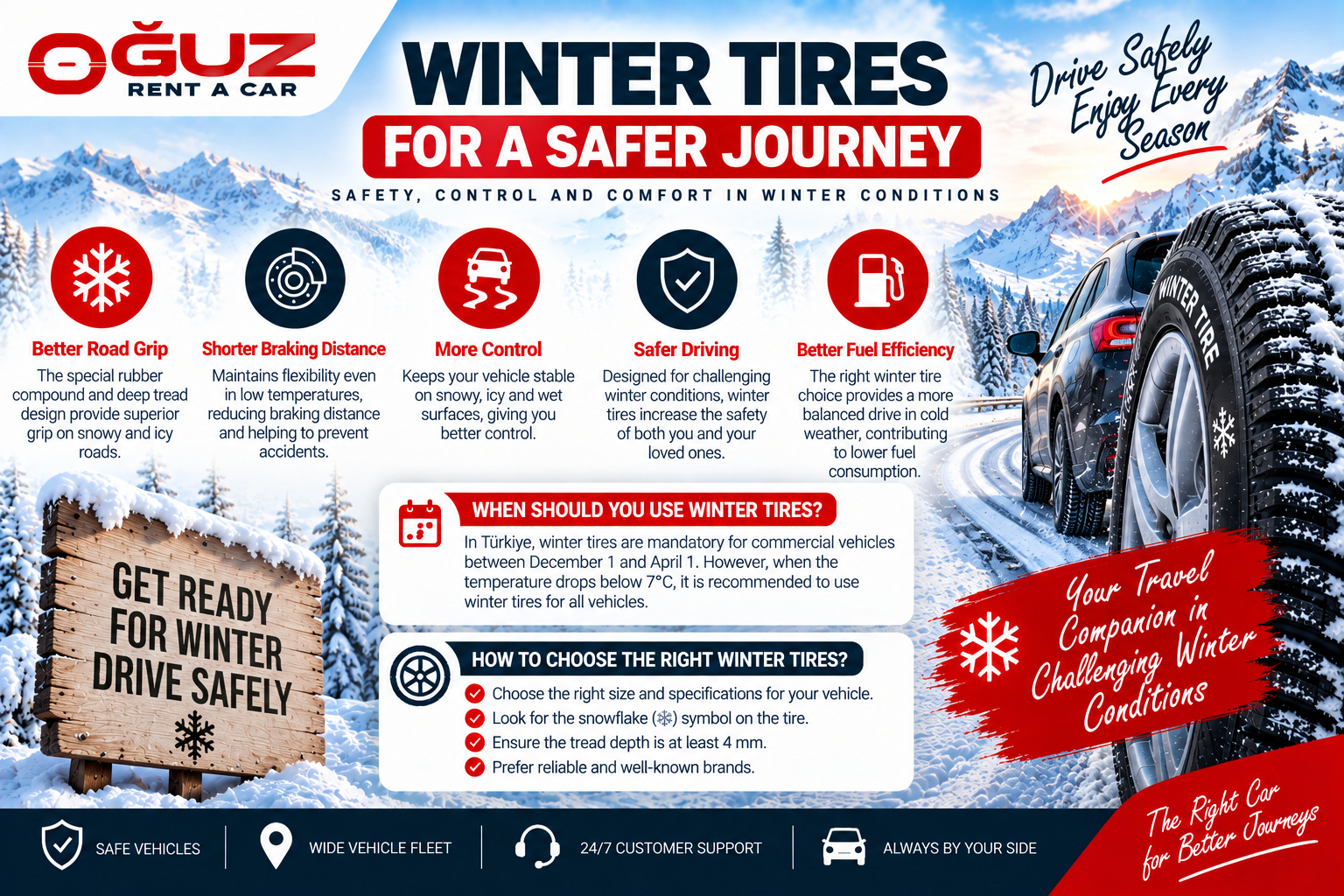
Driving during the winter months requires extra attention due to rain, snow, ice and low temperatures. Slippery road surfaces, reduced visibility and changes in braking distance can directly affect driving safety. For this reason, choosing the right tires is one of the most important steps in preparing your vehicle for winter conditions.
Winter tires should not be considered tires that are used only when it snows. Thanks to their special rubber compounds and tread patterns designed to support grip at low temperatures, they contribute to safer driving on cold, wet, snowy and potentially icy roads.
At Oğuz Rent a Car, we know that changing weather and road conditions, especially during winter in Cappadocia and the surrounding areas, can affect travel plans. Therefore, before setting off on a winter journey, it is important to check whether your vehicle and tires are suitable for seasonal conditions.
Winter tires are specially developed to perform in low temperatures. They have different rubber compounds and tread patterns compared with summer tires.
As temperatures drop, the rubber compound of summer tires can become harder. Winter tires, on the other hand, are designed to maintain their flexibility more effectively in cold weather. This helps maintain contact between the tire and the road surface, allowing the driver to control the vehicle more effectively.
The special grooves and fine sipes on winter tires also help channel snow, water and slush away from the tire surface.
Safe winter driving does not depend solely on the driver’s experience. The technical condition of the vehicle and the tires being used are also important factors in road safety.
The right winter tires can help maintain road grip, support braking performance and improve vehicle control, particularly at low temperatures.
On snowy or icy roads, sudden braking and sharp steering movements can make the vehicle more difficult to control. Winter tires do not completely eliminate these risks, but when combined with careful and appropriate driving, they can significantly contribute to safer journeys.
One of the most common misconceptions about winter tires is that they are only necessary when it snows.
In fact, the advantages of winter tires are not limited to snowy roads. As temperatures fall, tire performance can also change on dry or wet asphalt.
For this reason, when deciding to use winter tires, it is important to consider not only snowfall but also air temperature and overall road conditions.
The primary purpose of winter tires is to support the vehicle’s contact with the road in challenging weather conditions. With the right tire selection and under suitable driving conditions, winter tires can:
However, it is important to remember that no tire can make icy or heavily snow-covered roads completely risk-free. Driving speed should always be adjusted according to weather and road conditions.
When choosing winter tires, looking only at the brand or price is not enough. The tires should comply with the dimensions and technical specifications recommended by the vehicle manufacturer.
The tire’s production date, tread depth, overall physical condition and winter-use markings should be checked. The 3PMSF (Three-Peak Mountain Snowflake) symbol on the sidewall is an important marking indicating that the tire meets specified winter performance criteria.
It is also important for all four tires to be compatible with one another to help ensure balanced vehicle handling.
Using winter tires alone is not enough to ensure safe driving. Tire pressure should be checked regularly, and the tires should be inspected for cracks, cuts or abnormal wear.
During winter, drivers should increase their following distance and avoid sudden acceleration or hard braking. Extra caution should be taken on shaded roads, bridges, viaducts and high-altitude routes, where hidden ice may form.
Depending on road conditions, additional equipment such as snow chains may also be required in areas with heavy snowfall.
Cappadocia takes on an entirely different beauty during winter. Snow-covered fairy chimneys, valleys and historic settlements create spectacular scenery. However, snow, frost and ice may occur on some roads in the region.
When traveling to Göreme, Uçhisar, Ürgüp, Avanos, Ortahisar and the surrounding valleys, it is useful to check the weather forecast and current road conditions. The risk of icing may increase during the early morning and at night as temperatures fall.
It is especially important to adjust your driving speed to the conditions when traveling on higher-altitude or less frequently used roads outside town centers.
When renting a car during winter, you should consider more than just the vehicle model, fuel type or luggage capacity. The weather conditions of the region you plan to visit should also be taken into account when choosing a rental vehicle.
Asking about the vehicle’s suitability for winter conditions and requesting winter tires, snow chains or other winter equipment in advance, when necessary, can help you plan a safer and more comfortable journey.
This becomes particularly important in regions such as Cappadocia, where snow and icy conditions may occur during the winter months.
Exploring Cappadocia in winter means experiencing one of the region’s most impressive seasons. However, a comfortable winter journey starts with choosing the right vehicle, using suitable equipment and driving carefully.
With Oğuz Rent a Car, you can evaluate vehicle options suitable for your travel plans and seasonal conditions and ask about the winter equipment you may need before making your reservation.